

Pretty Websites Don’t Pay Bills — Conversions Do
A beautiful website feels like progress. The colors are right, the fonts look modern, the animations are smooth, and it looks impressive when you send the link to a friend or client. But many business owners eventually run into a frustrating realization: despite having a “nice” website, the phone doesn’t ring, the contact form stays quiet, and revenue doesn’t change.
This is one of the most common problems businesses face online. The issue isn’t that the website is ugly. The issue is that it was never built to convert.
A website’s real job isn’t to look good. Its job is to turn visitors into leads, customers, or booked appointments. When it fails at that, no amount of visual polish will make it profitable.
The Difference Between Design and Performance
Design focuses on how a website looks. Conversion focuses on how a website behaves. Many websites prioritize aesthetics while ignoring how users actually think, scroll, and make decisions.
Visitors don’t arrive on a website looking to admire branding. They arrive with a question, a problem, or a need. If the website doesn’t immediately guide them toward a solution, they leave. This happens in seconds, often before the visitor scrolls past the first screen.
A high-performing website answers three questions almost instantly: what you do, who it’s for, and what the visitor should do next. If those answers aren’t obvious, the site becomes visual noise instead of a business tool.
Why “Pretty” Websites Often Fail
Most low-converting websites were built with the wrong goal in mind. They are designed to impress the business owner instead of serving the customer. This leads to vague headlines, generic messaging, and layouts that look elegant but offer no direction.
Another common issue is that everything is treated as equally important. When a page has multiple messages competing for attention, users don’t choose one—they choose none. Without a clear primary action, visitors scroll, skim, and disappear.
Many websites also assume visitors already trust the brand. In reality, trust must be earned quickly. Without clear value statements, social proof, or reassurance, users hesitate. Hesitation kills conversions.

What Conversion-Driven Websites Do Differently
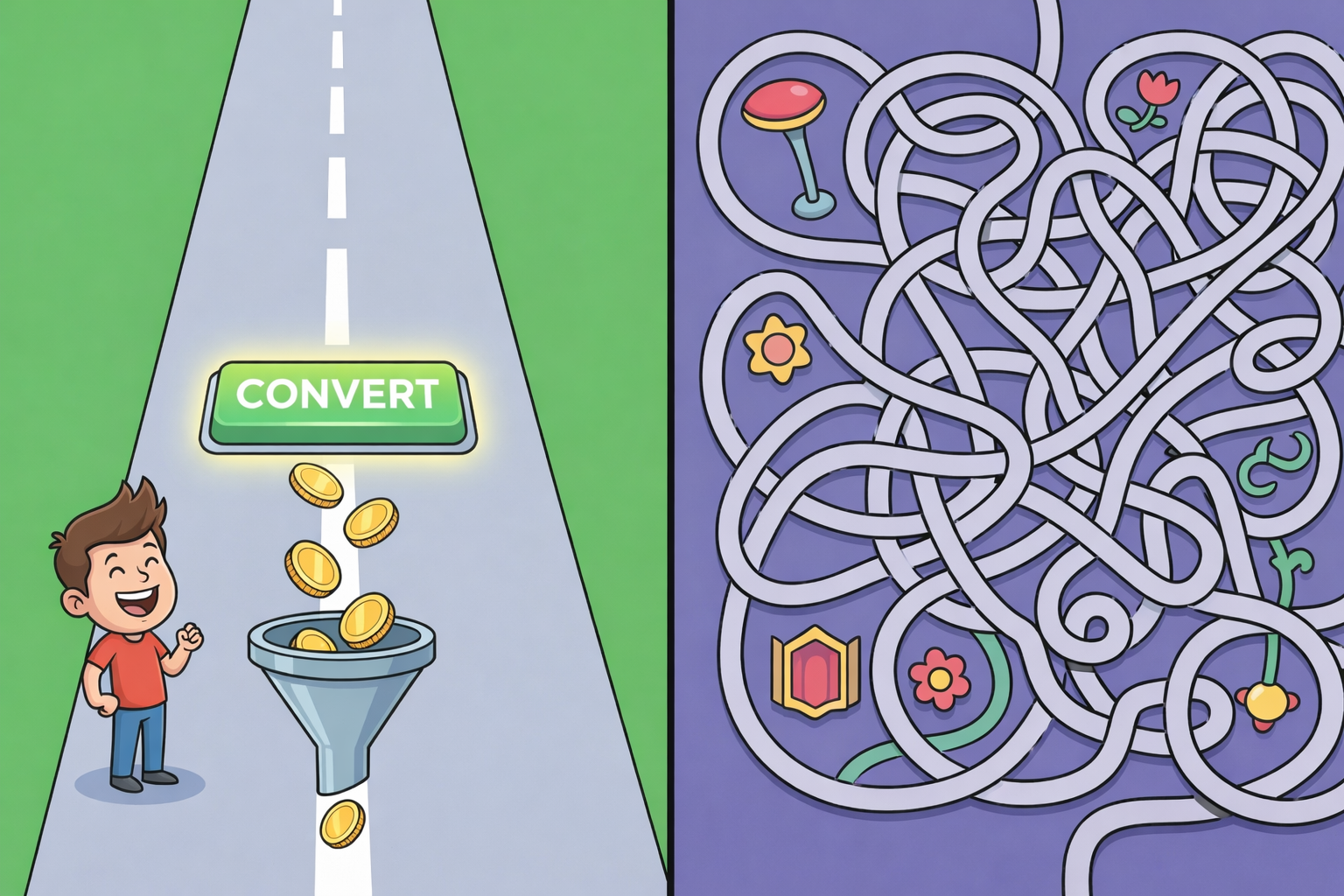
A conversion-focused website is intentionally structured. It leads visitors through a logical path, from curiosity to clarity to action. Every section exists for a reason, and every page has a defined goal.
Instead of generic slogans, it uses clear, benefit-driven messaging. Instead of hiding contact options, it makes the next step obvious and easy. Instead of overwhelming users with information, it prioritizes what matters most at each moment.
Conversion-driven sites also remove friction. Forms are simple. Pages load quickly. Navigation is intuitive. The experience feels effortless, which makes taking action feel natural rather than forced.
The Role of Strategy in Conversion
Conversion doesn’t happen by accident. It comes from understanding user intent, traffic sources, and business goals. Someone arriving from a Google search behaves differently than someone clicking an ad or visiting from social media. A high-performing website accounts for those differences.
This is why conversion optimization is inseparable from SEO, Google Ads, and local visibility. Traffic without strategy is just noise. When traffic and conversion work together, the website becomes a revenue engine instead of a static brochure.
Your Website Should Be Your Best Salesperson
A good salesperson doesn’t just look professional. They listen, guide the conversation, answer objections, and ask for the sale at the right moment. A conversion-focused website does the same thing, twenty-four hours a day, without breaks.
If your website isn’t actively generating leads or sales, it isn’t doing its job. That doesn’t mean you need to throw it away and start over. Often, small strategic changes in messaging, layout, and calls to action can completely change performance.
Pretty websites may win compliments. Conversion-focused websites pay bills. The difference isn’t design talent—it’s intent, structure, and strategy.