
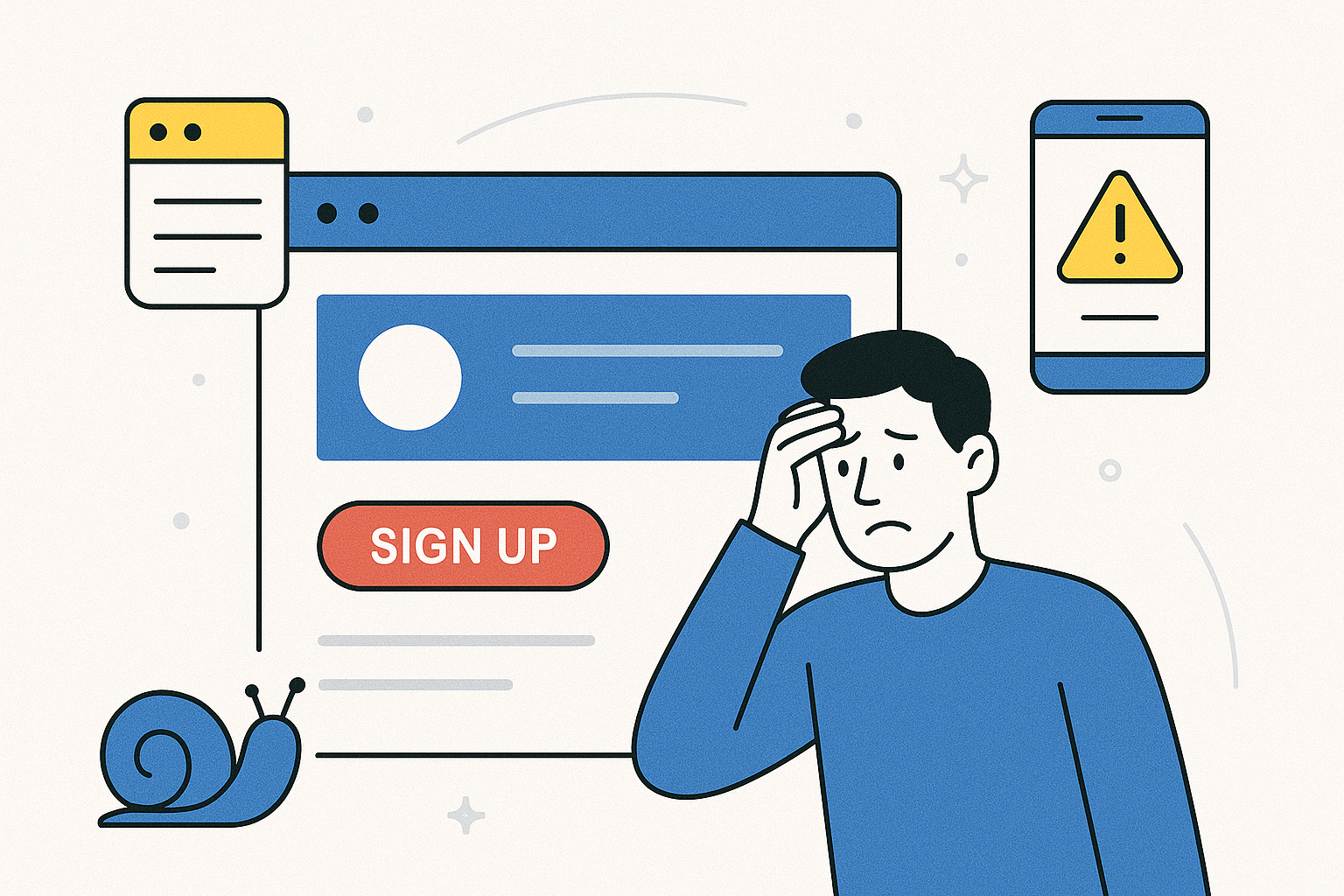
Why Most Small Business Websites Fail in 2025 — And How to Fix Yours Fast
In 2025, a website isn’t just a digital brochure. It’s your storefront, your sales rep, your credibility, and often your customer’s first impression of your entire business.
Yet despite how important it is, most small business websites are quietly failing.
Not because the business is bad.
Not because the owner isn’t trying.
But because the website was never built to do the one job it must do: turn attention into action.
If your website gets visitors but no calls, no leads, and no customers, the problem usually comes down to a few hidden issues that most business owners never see.
Let’s break them down—clearly, simply, and with solutions you can apply right away.
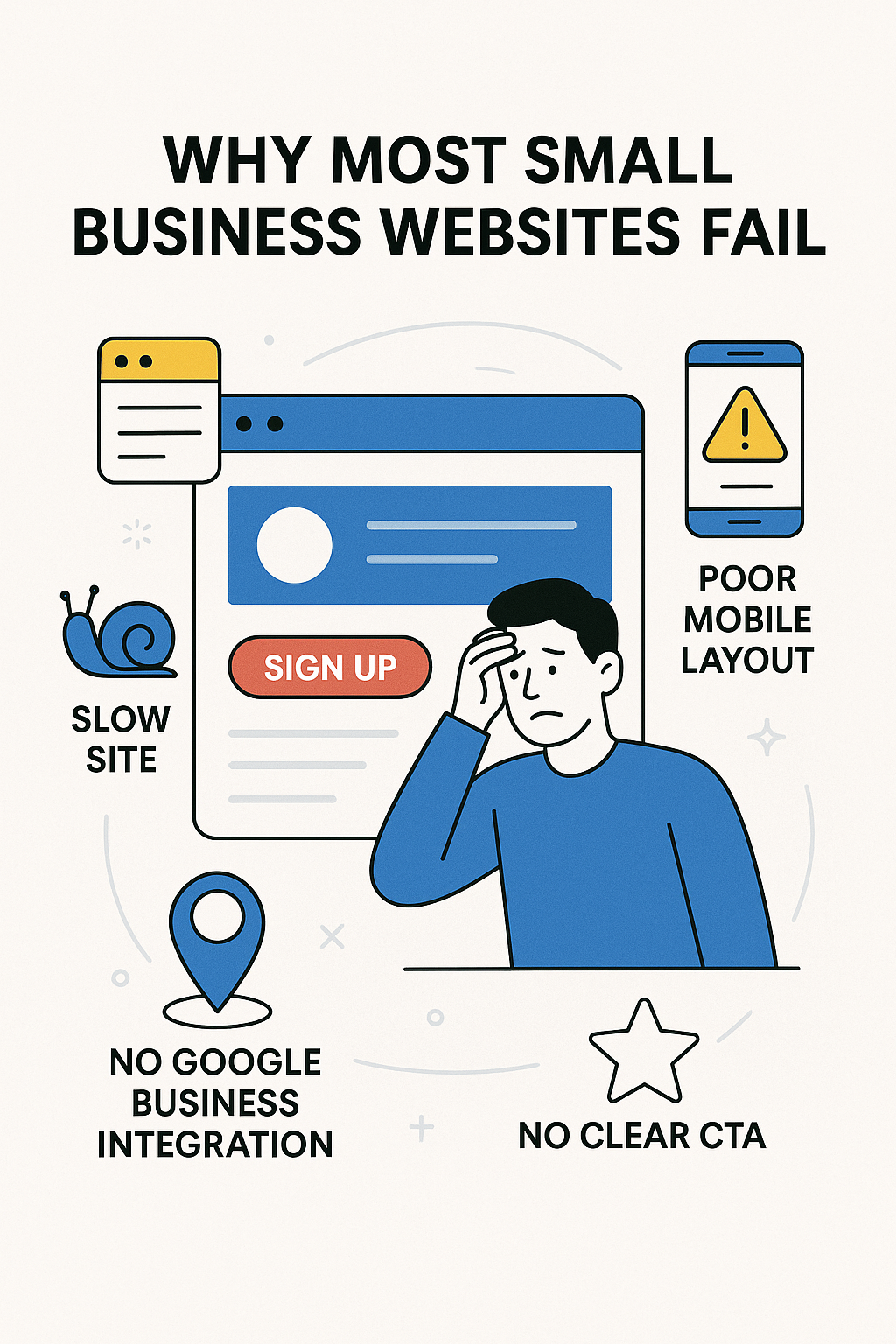
1. Your Website Is Slow (and Customers Don’t Wait Anymore)
Speed is the first impression.
When a site loads slowly, people don’t think “this website is slow.”
They think: “This business doesn’t care.”
A slow site creates an immediate sense of frustration, and customers leave before they even see what you offer. In fact, research shows that after about 3 seconds, more than half of visitors disappear.
The fix is straightforward: lighter images, better hosting, fewer bloated elements, and modern optimization. A fast website feels trustworthy. A slow one feels abandoned.
2. There’s No Clear Path for the Customer
Even beautifully designed websites fail when they don’t tell visitors what to do.
A surprising number of business sites hide their contact button, use vague language like “learn more,” or bury important actions halfway down the page.
Customers shouldn’t have to guess.
Every page needs a clear, unmistakable call to action—Book a Call, Request a Quote, Order Now.
When you guide the visitor, they follow.
When you make them think, they leave.
3. The Mobile Experience Isn’t Truly Mobile
More than 75% of local business searches start on a phone.
But many websites still behave like they’re living in 2012.
Text that requires pinching. Buttons too small to tap. Menus that open off-screen. Pages that load differently on every device.
A great mobile site feels effortless. It scrolls cleanly, loads instantly, and keeps everything essential within a thumb’s reach.
This isn't optional anymore—it's where the majority of your customers actually see you.
4. Your Website Isn’t Connected to Google Business
This is one of the most common—and expensive—mistakes.
A website without a fully optimized Google Business Profile loses local ranking power, misses map traffic, and rarely shows up for customers searching nearby.
When your Google Business Profile and website work together, you get:
higher local rankings
more calls
more direction requests
more trust from customers
When they don’t, you’re practically invisible.
5. The Messaging Doesn’t Hit in the First 5 Seconds
Customers don’t scroll to understand you.
They decide immediately.
If your homepage opens with “Welcome to our website,” the visitor still has no idea who you are or what you offer.
Every second of confusion loses another potential customer.
Your hero section should answer, instantly:
What you do
Who you serve
Why you’re the right choice
Clarity converts more than any design trick.
6. You Can’t Improve What You’re Not Measuring
Most business websites have zero analytics—or they have analytics installed but never configured.
Without tracking, you can’t see:
where visitors drop off
which pages convert
which ads work
which buttons get clicked
When data is missing, marketing becomes guesswork.
When tracking is in place, every decision becomes easier, cheaper, and more effective.
7. SEO Was an Afterthought (Or Not Considered at All)
Many websites are built to look nice, not to rank.
But without proper SEO structure— clean URLs, real keywords, internal linking, schema, and a logical page hierarchy—Google simply doesn’t take your site seriously.
SEO isn’t something you sprinkle on top after the site is done.
It’s something that needs to be baked into the foundation.
8. The Website Is Built From a Cookie-Cutter Template
Templates look fine at first glance, but they come with problems:
they’re slow, they’re bloated, they look like everyone else’s website, and they rarely convert.
A generic template can’t express what makes your business different.
A custom-built site not only feels more professional—it guides customers in a way generic layouts never can.
Most Websites Aren’t Broken—They’re Just Not Built to Win
The good news?
These problems are completely fixable.
A high-performing website doesn’t need to be complicated. It needs to be:
fast
clear
mobile-friendly
connected to Google
structured for SEO
designed to convert
When your website communicates trust and removes friction, customers respond immediately.
That’s what we build at EmixWeb—websites designed not just to look good, but to grow your business.